Home / Articles
How Soon Can You See Clearly After Cataract Surgery?
Home / Articles
How Soon Can You See Clearly After Cataract Surgery?
Still, vision recovery is not a single moment of clarity. It’s a carefully choreographed process shaped by healing biology, surgical technique, lens technology, and the eye’s individual history. Understanding that process helps patients feel confident, prepared, and reassured as they move through recovery.
Let’s walk through what really happens after cataract surgery — day by day, week by week — so you know exactly what to expect.
A cataract develops when the eye’s natural crystalline lens becomes cloudy with age, much like a camera lens that has fogged or yellowed over time. Even a small amount of clouding can scatter light, reducing sharpness, contrast, and night vision.
During cataract surgery:
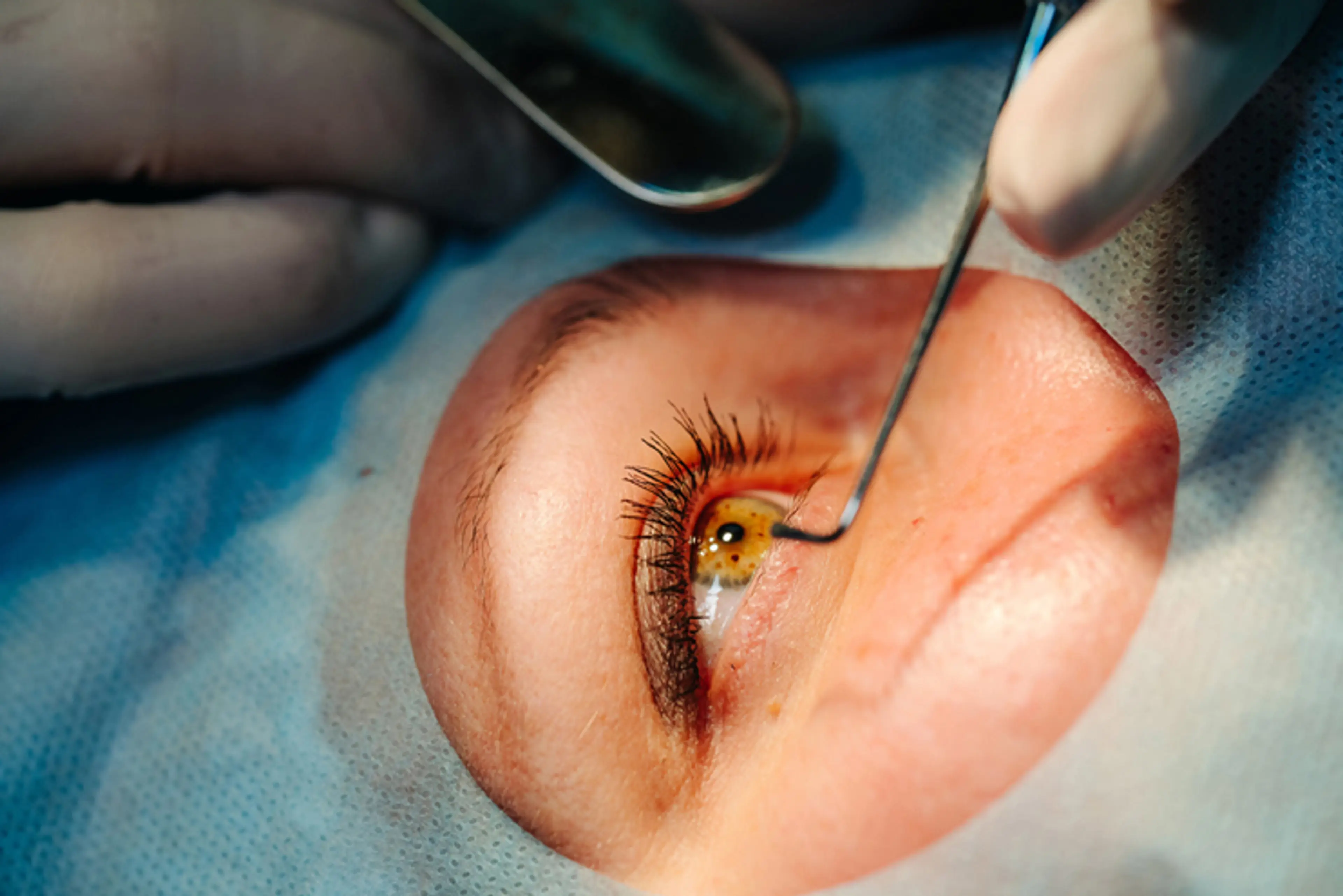
The cloudy lens is gently broken up and removed
Light can once again focus properly on the retina
Modern cataract surgery is:
Minimally invasive
Typically completed in 10–15 minutes
Performed under topical or local anesthesia
One of the safest and most frequently performed surgeries worldwide
For many patients, yes — and it’s one of the most emotionally impactful moments after surgery.
A noticeable improvement in brightness
Reduced haze compared to pre-surgery vision
Colors appearing cleaner or more vivid
Less glare from lights
This happens because the clouded lens that blocked and scattered light has been removed. Even before swelling fully subsides, the optical pathway is already clearer.
However, during the first day, vision may still feel:
Slightly blurry or foggy
Sensitive to light
Mildly fluctuating throughout the day
These sensations are normal and usually temporary. The cornea — the clear front window of the eye — may have mild swelling, and the brain is adjusting to a new optical system.
During the first postoperative week:
Blurriness continues to decrease
Focus improves noticeably for daily activities
Light sensitivity fades
Eye comfort steadily increases
Many patients can:
Watch TV comfortably
Use smartphones or computers for short periods
Walk outdoors without visual stress
Resume light daily routines
Prescription eye drops play an important role during this phase. They:
Control inflammation
Prevent infection
Support smooth healing
At follow-up visits, ophthalmologists assess:
Visual acuity
Intraocular pressure
Lens position
Corneal clarity
By the second to fourth week, most patients describe their vision as:
Stable
Comfortable
Predictable
During this phase:
The eye finishes internal healing
Minor residual swelling resolves
Night vision improves significantly
Glare and halos diminish
For patients who received advanced or premium IOLs, this is also the adaptation period. The brain learns how to process vision from the new lens, especially with multifocal or extended-depth-of-focus lenses.
At this stage, ophthalmologists often:
Confirm long-term visual outcomes
Discuss whether glasses are needed
Fine-tune expectations for near, intermediate, and distance vision
Many patients are surprised to realize how long they adapted to poor vision before surgery — and how effortless seeing feels afterward.
By this time:
Healing is complete
Vision is fully stabilized
Eye drops are usually discontinued
Final glasses prescriptions (if needed) can be issued
Although recovery is fast for most patients, the timeline can vary depending on several important factors.
Conditions such as:
Dry eye disease
Macular degeneration
Glaucoma
Diabetic retinopathy
can influence how quickly vision sharpens and how clear it ultimately becomes. Cataract surgery can still significantly improve vision, but expectations should be individualized.
Different lenses have different adaptation curves:
Proper lens selection, based on lifestyle and eye anatomy, plays a major role in patient satisfaction.
High-precision diagnostics, accurate biometry, and experienced surgical hands matter. Clinics with:
High surgical volumes
Advanced imaging systems
Customized lens planning
This is one reason many patients seek cataract surgery in Gangnam, where specialized eye centers focus exclusively on ophthalmology.
While mild discomfort and visual fluctuation are expected early on, certain symptoms should never be ignored.
Contact your ophthalmologist promptly if you experience:
Sudden or worsening vision loss
Increasing eye pain
Severe redness or discharge
Flashes of light or dark curtain-like shadows
Early evaluation ensures that rare complications are identified and treated quickly.
Common reflections include:
“I felt confident walking outside the next day.”
“Night driving is no longer stressful.”
“I didn’t realize how yellow my vision had become until it was gone.”
These reactions highlight more than visual clarity — they reflect restored confidence, safety, and quality of life.
In the past, cataracts were left to “ripen.” Today, that approach is outdated.
Delaying surgery can:
Increase lens hardness
Prolong recovery
Increase surgical complexity
Delay visual rehabilitation
Early detection allows surgery to be performed when:
The eye is healthier
Outcomes are more predictable
Recovery is smoother
This proactive approach is deeply rooted in Korean ophthalmic care and benefits both local and international patients.
In real-world clinical experience:
If you’re experiencing:
Gradually worsening blur
Increased glare at night
Difficulty reading despite new glasses
Colors that seem faded or yellowed
…it may be time for a professional cataract evaluation.
Clear vision often returns sooner than expected. Sometimes, the biggest step is simply deciding not to live with blurred sight any longer.